
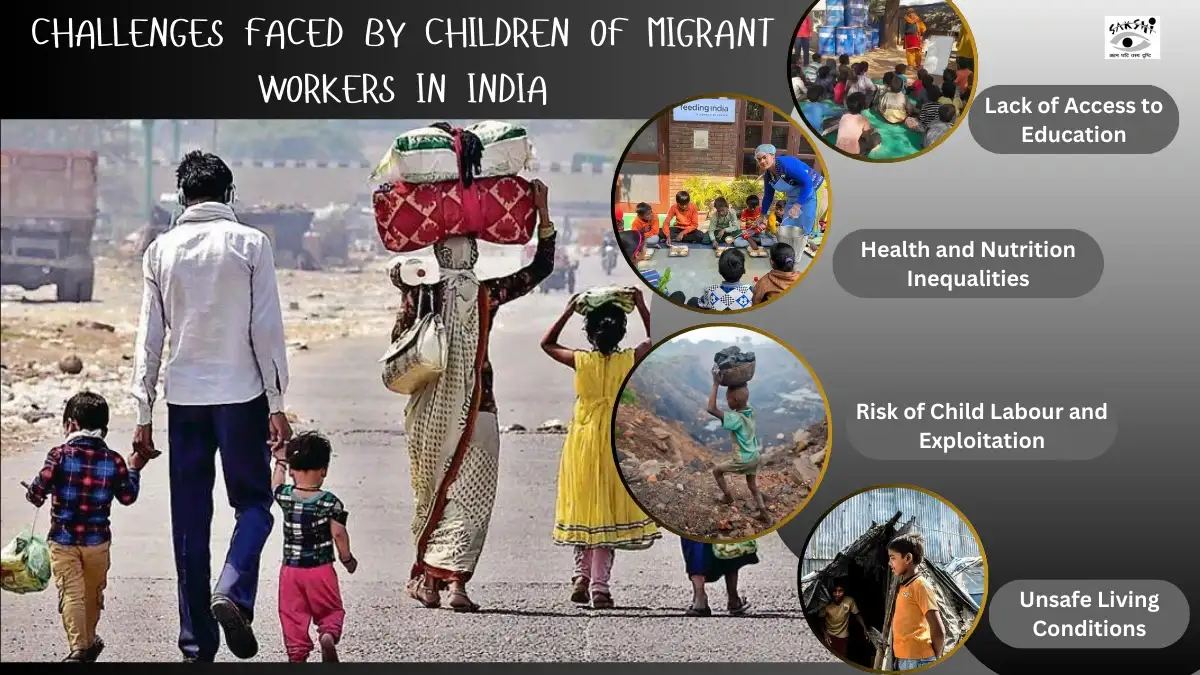
India’s rapid urbanization and infrastructure growth continue to attract millions of migrant workers to cities each year. While they contribute significantly to the development of roads, buildings, and public facilities, their own living conditions remain fragile and temporary. Among the most affected are the children of Migrant Workers, invisible citizens growing up in transit, without stable education, healthcare, or protection. These children live in an environment where basic rights are often missing, not by choice but due to poverty, displacement, and lack of support systems.
Children of Migrant Workers face multiple barriers that hinder their overall development. Understanding these challenges is crucial to design better interventions and create an environment where every child receives equal opportunities to thrive.
Lack of Access to Education
One of the biggest issues for migrant children is frequent school disruption. Families move from one construction site or city to another in search of work. Each move forces children to drop out of school due to complicated admission procedures, language differences, or lack of documentation. Even if enrolled, maintaining regular attendance becomes difficult as families may relocate again within weeks. This irregular schooling creates severe learning gaps and often leads to permanent dropout. To deal with this concern, we run education programme for children and provide them all learning facilities.
Unsafe Living Conditions
Most migrant families live near construction sites or in temporary shelters with no basic amenities. Children play near hazardous materials, tools, and heavy machinery, making accidents common. There is limited access to clean water, safe play spaces, sanitation, and secure shelter. These unsafe surroundings affect not only physical safety but also emotional well-being.
Health and Nutrition Inequalities
With limited income, nutrition becomes secondary to survival. Migrant children often lack proper meals, resulting in undernutrition, stunted growth, and weakened immunity. Our Meals Program for Underprivileged Children help them to offer quality food. Health check-ups are rare, and access to hospitals or Anganwadi services is minimal. Poor hygiene conditions further expose them to infections, respiratory issues, and skin diseases. Without regular health support, small preventable problems escalate into lifelong disadvantages.
Emotional Stress and Neglect
Parents typically work long hours without paid leave or childcare support. This leaves children unsupervised for most of the day or forces older siblings to take care of younger ones, sacrificing their own education. Loneliness, fear, and stress become part of their daily life. Without a stable routine or nurturing environment, their emotional development is severely impacted.
Risk of Child Labour and Exploitation
Due to economic hardship, many children start working at an early age – cleaning sites, carrying loads, or taking petty jobs to support the family. The lack of protective systems makes them vulnerable to exploitation, abuse, and trafficking. Their childhood gets replaced with responsibility and fear far too soon.
Also Read: How Child Care NGOs Are Changing Lives of Underprivileged Children
Social Exclusion and Identity Challenges
Migrant families are often treated as temporary settlers with no belonging to the community. Children struggle to make friends, adapt to new environments, or learn local languages. This constant displacement leads to social withdrawal and low self-confidence. They grow up feeling invisible, without identity documents, without proper address, and without a stable home.
Impact on Education Continuity and Lifelong Success
The combination of dropouts, malnutrition, emotional neglect, and unsafe environments tears away a child’s right to grow and learn freely. Without strong educational support, most remain trapped in generational cycles of poverty.
To better understand their challenges, here are the major impacts in bullet form:
• High dropout rates due to frequent migration
• Risk of accidents and unsafe environments
• Malnutrition and poor health outcomes
• Lack of early childhood development support
• Exposure to child labour and exploitation
• Social isolation and emotional distress
• Difficulty accessing government services, schemes, or documentation
How Solutions are Emerging at the Ground Level
Child Care NGO and community-based programs are stepping in to bridge these gaps. Initiatives like Mobile Crèches, community learning centres, and health campaigns are helping protect these children and support their development. Preschool education, nutritious meals, safety supervision, and life skills activities create a foundation for healthier learning environments. Parental counselling and awareness drives encourage consistent schooling and reduce risks for children. We collaborate with government departments, and builders to set up and run Mobile Creches, a day care centre for kids. As one of the best NGO in Gurgaon, we always try to offer the best facilities for kids.
Ensuring the Rights and Future of Children of Migrant Workers
Children of migrant workers navigate a life full of uncertainties, constant movement, safety risks, and limited educational opportunities. Yet, these children carry immense potential and enthusiasm when provided with the right support. When society invests in their early care, education, health, and safety, we contribute to a more equitable and empowered India. Ensuring their rights is not an act of kindness, it is a responsibility we must uphold as a nation.
Whether through stronger policies, more inclusive schooling, or community-based childcare services, every effort counts. By giving attention to this invisible group, we help shape lives that otherwise risk being forgotten. You can also make a contribution towards our project by making a donation for childcare.