
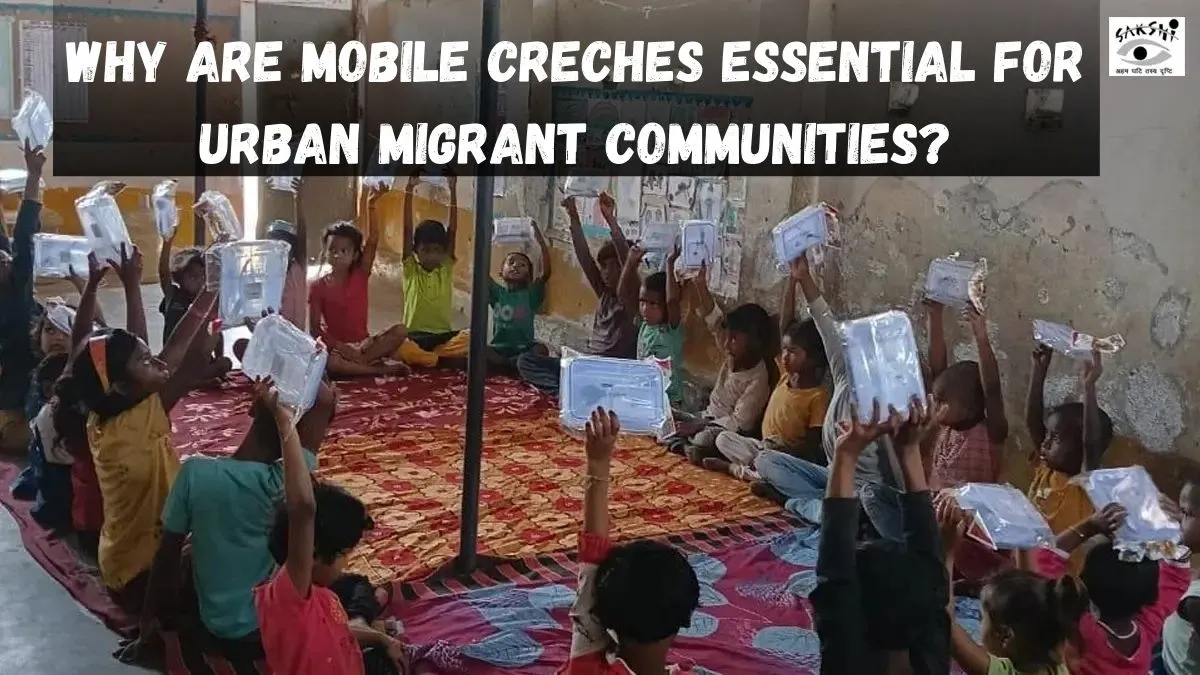
Mobile Creches for Kids are a quiet lifeline on India’s busy construction sites. Every morning in India’s cities, construction sites become busy. Machines start working. Workers arrive with tired faces and focused minds. Among them are families who have travelled long distances in search of work. And somewhere near piles of bricks or half-built buildings, children sit quietly, watching a world that has no space designed for them.
For urban migrant families, childcare is not a planned choice. It is a daily struggle. Parents work long hours. Homes are temporary. Schools are far away or difficult to access. In this reality, childhood becomes uncertain. This is why Mobile Creches for Kids are not just helpful. They are essential.
Mobile crèches bring care, safety, and learning directly to where migrant families live and work. They meet children where they are, instead of expecting children to fit into systems that were never built for them.
Life on the Move Leaves Children Behind
Urban migration is driven by survival. Families move from villages to cities to earn daily wages. Construction sites, factories, road projects, and informal settlements become home. These spaces are unsafe for young children, yet there are very few alternatives.
Children often spend their days left alone, exposed to dust, noise, and accidents. Older siblings may be forced to take on caregiving roles. Learning, play, and rest slowly disappear from their lives.
The daily struggles of children of migrant workers are closely linked to unstable living conditions. Frequent relocation breaks routines. Lack of documents blocks access to schools. Language changes create confusion. Over time, these gaps grow wider.
Why Traditional Childcare Models Do Not Work Here
Most childcare systems assume stability. Fixed addresses. Regular school hours. Predictable routines. Migrant families rarely have any of these.
A child may live near one construction site today and another next month. Enrolling them in formal childcare becomes difficult or impossible. As a result, children remain outside the safety net.
Mobile crèches solve this problem by being flexible. They move with communities. They operate close to work sites. They adjust schedules based on parents’ working hours. This flexibility makes them effective in ways traditional models cannot be.
What Mobile Crèches Actually Provide
Mobile crèches are more than temporary shelters. They are structured spaces designed for early childhood care and growth. Children receive supervision, nutritious meals, basic health checks, and early learning activities.
Caregivers focus on age-appropriate play, stories, and social interaction. Children learn routines. They learn to trust. They learn to feel safe again.
For many children, this may be the first place where they are treated as children, not as silent witnesses to adult struggles.
The Role of NGOs in Making This Possible
Mobile crèches exist because organizations choose to work closely with migrant communities. NGOs understand that childcare must adjust to people’s lives, not the other way around.
Through NGO-led childcare interventions in urban areas, mobile crèches are planned, staffed, and supported. These organizations work with contractors, local authorities, and families to keep services running.
Their involvement ensures that childcare continues even when families move from one site to another.
Early Learning in Unlikely Places
Learning does not need formal classrooms. For children in Day Care and Creche Programs, learning happens through play, conversation, and daily routine. Songs, games, drawing, and storytelling help build language and confidence.
This early exposure prepares children for future schooling. It reduces fear and hesitation. When children finally enter formal education, they are not starting from nothing.
Mobile crèches act as a bridge between unstable early years and structured learning later.
Nutrition and Health Cannot Wait
Migrant children face high risks of poor nutrition and untreated illness. Crowded living conditions and limited healthcare access make the situation harder.
Mobile crèches often provide regular meals, growth checks, and basic medical support. Clean water, hygiene habits, and rest become part of the day.
These simple steps bring visible improvement. Children gain strength. Illness reduces. Attendance becomes more regular.
Supporting Parents Without Blame
Migrant parents worry deeply about their children. They know the risks. But choices are limited. Missing work is not an option.
Mobile crèches offer relief without judgement. Parents know their children are safe nearby. They can work with less fear and stress. This improves family stability.
Caregivers also guide parents on nutrition, hygiene, and child development, creating shared responsibility.
Connecting to Wider Child Welfare Efforts
Mobile crèches are often linked to broader efforts focused on early childhood support for underprivileged children. NGOs connect childcare with education, health, and nutrition programs.
As children grow, they are guided toward schools or bridge learning centers. Families receive help with documentation and access to services. This continuity prevents children from being forgotten again.
Why Mobile Crèches for Kids Matter Today
Urban migration continues to grow. Cities depend heavily on migrant labour. Without mobile childcare solutions, more children will grow up without safety or learning.
Mobile crèches respond with care and practicality. They work within difficult conditions instead of waiting for perfect systems.
They protect childhood in places where it is most at risk.
A Childhood That Moves, But Is Protected
Children of migrant families already live with uncertainty. They should not also grow up without care.
Mobile Creches for Kids offer something basic but powerful. A safe place. A caring adult. A meal. Time to learn and play.
In busy cities and changing lives, mobile crèches remind us of a simple truth. Every child deserves care, no matter where their parents work or how often they move.
And sometimes, the most meaningful support is the kind that knows how to move with them.