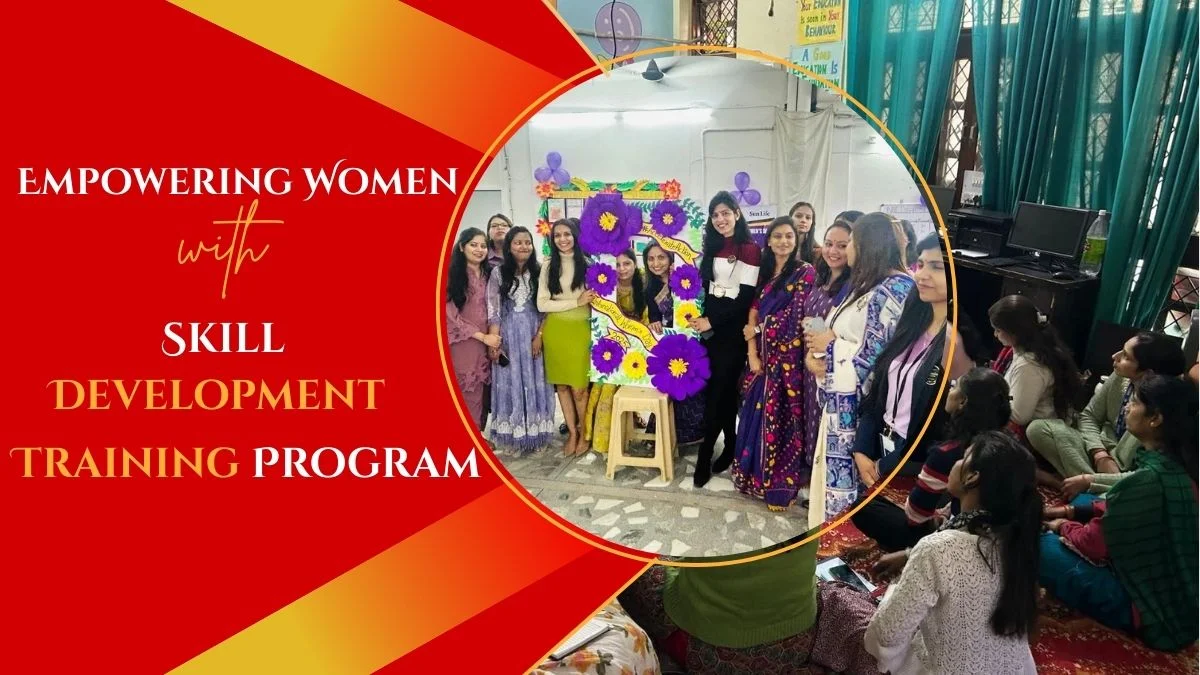
Women’s empowerment is crucial for achieving inclusive growth and social progress in India. Despite making up nearly half of the population, women often face barriers in education, employment, and decision-making. Empowering women leads to equal opportunities, reduces gender gaps, and strengthens families and communities.
Data on working women is missing in statistics, as most of them are working in agricultural fields with very low wages or are unpaid. There is no accountability for such work. Addressing all such issues as gender inequalities, access to skill-building resources requires well-planned strategies. Some of the initiatives, like Sakshi NGO’s Sewing machine operator course reach this approach and show a positive contribution towards women’s livelihood programs. Through this program, many women benefit from earning an income, getting placed in the garment industry, self-reliability, certification, and economic independence.
Impact of Our Sewing Machine Operator Course
A project that was initiated in 2020 had trained more than 500 women and placed more than 450 beneficiaries coming from various states and underprivileged communities. As per the information collected through the baseline survey of the trainees, 42% beneficiaries belong to Uttar Pradesh, 38% belong to Bihar, 12% are from Jharkhand, and 4% each are from Gurgaon (Dundahera) and Rajasthan.
The economic condition of all the beneficiaries was very poor – 38% of Beneficiaries didn’t have sustainable employment so they earn below 1 Lac annually and rest 38% Beneficiaries’ family income is below Rs 1,50,000. Our team has given them a guideline, a training and certification that helped them to get a job in the garment industry and financially lift their families out of poverty.
Read this: How does Vocational Training for Women help them to be financially independent?
How the Training is provided- Our Approach
On the first day, participants are introduced to the apparel industry, its production processes, and gain a basic understanding of sewing machines.
On the second day, they learn about sewing fundamentals, including different types of needles, threads, and stitches, while also beginning to familiarise themselves with operating the sewing machine.
On the third day, participants practice threading on paper with the help of thread and are guided through the different parts of the sewing machine.
On the fourth and fifth days, they engage in practical exercises, focusing on straight stitching and topstitching to strengthen their control and precision.
During the last two days of the first week, participants are introduced to circle stitching techniques and practice finishing methods for cuffs and collars.
In the second week, the training focuses on Lockstitch Sewing Machines, where participants learn about basic operations as well as essential adjustments required for smooth functioning.
In addition to technical skills, participants are also trained in basic workplace etiquette, including correct sitting posture, effective self-introduction, and appropriate communication with supervisors and senior colleagues.
After completion of training, a Certificate in Sewing Machine Operator Course is also provided to them and 100% job placement opportunity. The salary range for most workers in Sewing machine operations is from Rs 8,000 to Rs 11,105 per month at the beginning level.
Areas we covered under this program
As a Top NGO in Gurgaon, we actively work for various programs for children, women, youth and poor people. Our Women Skill Development program running in Gurugram is benefitting both male and female candidates, primarily from states like Uttar Pradesh, Bihar, and Madhya Pradesh, who come to Delhi NCR in search of livelihood opportunities.
Benefits of Skill Development Program
Skill development is equally important as it equips women with practical abilities to secure employment, start businesses, and contribute to the economy. In a rapidly changing job market, women need access to modern skills in technology, healthcare, entrepreneurship, and vocational trades. Focused initiatives in education, life skills training, and digital literacy can help women achieve financial independence, earn a livelihood and leadership roles, resulting in driving India’s economic and social development.