
Sakshi’s Skill Development Project for women has been envisioned to enhance the lives of women who come from marginalised communities. The program focuses on connecting them to the best livelihood opportunities and making them independent. It is an important aspect of Women’s Empowerment for which Sakshi NGO works. Vocational Training for Women covers training at the centres to enable women and adolescent girls with poor socio-economic backgrounds to become self-empowered. With that, objective Sakshi is imparting skill development training in Delhi NCR through its various centres situated at Jasola, Chadanhulla in South Delhi, Udyog Vihar & Dundahera in Gurgaon, especially those who lost jobs during/due to COVID-19.
Ongoing Skill Training Programs
Through various skill development programs, we provide training to women and girls across the designing, hospitality sectors, which ensure financial sustainability, job placements and earn an income for livelihood.
Sewing Machine Operator Course
Sakshi is running a focused Skill Development Program for women in India- Sewing Machine Operator Course (SMO Course) in Gurugram district, Haryana, designed to equip youth and women with job-ready skills in the tailoring and fashion design sector. This initiative is known as the SMO Course, developed in alignment with the National Skill Development Corporation (NSDC).
Program Highlights
- Location: Gurugram, Haryana
- Target Beneficiaries: Both male and female candidates, primarily from states like Uttar Pradesh, Bihar, and Madhya Pradesh, who migrate in search of livelihood opportunities.
Course Details
- Course Duration: 25 days
- Curriculum: Developed in collaboration with NSDC, covering essential tailoring and garment construction skills.
- Machinery Used: Training is conducted using advanced digital sewing machines provided by JUKI, enhancing the learners’ exposure to modern tools.
Key Skills Taught
- Basic to advanced tailoring techniques
The curriculum is structured to provide hands-on training, ensuring participants gain practical, workplace-relevant skills. Our Skill development centres are prepared for the best environment for learning skills and showing active participation. All our trainers come from an experienced background to deliver their best and motivate women for learning.
Placement Support
- The program guarantees 100% placement for successful trainees in reputed garment factories.
- Most participants are eager to start working from day one, and Sakshi bridges the gap by providing them with quality training and direct job placements.
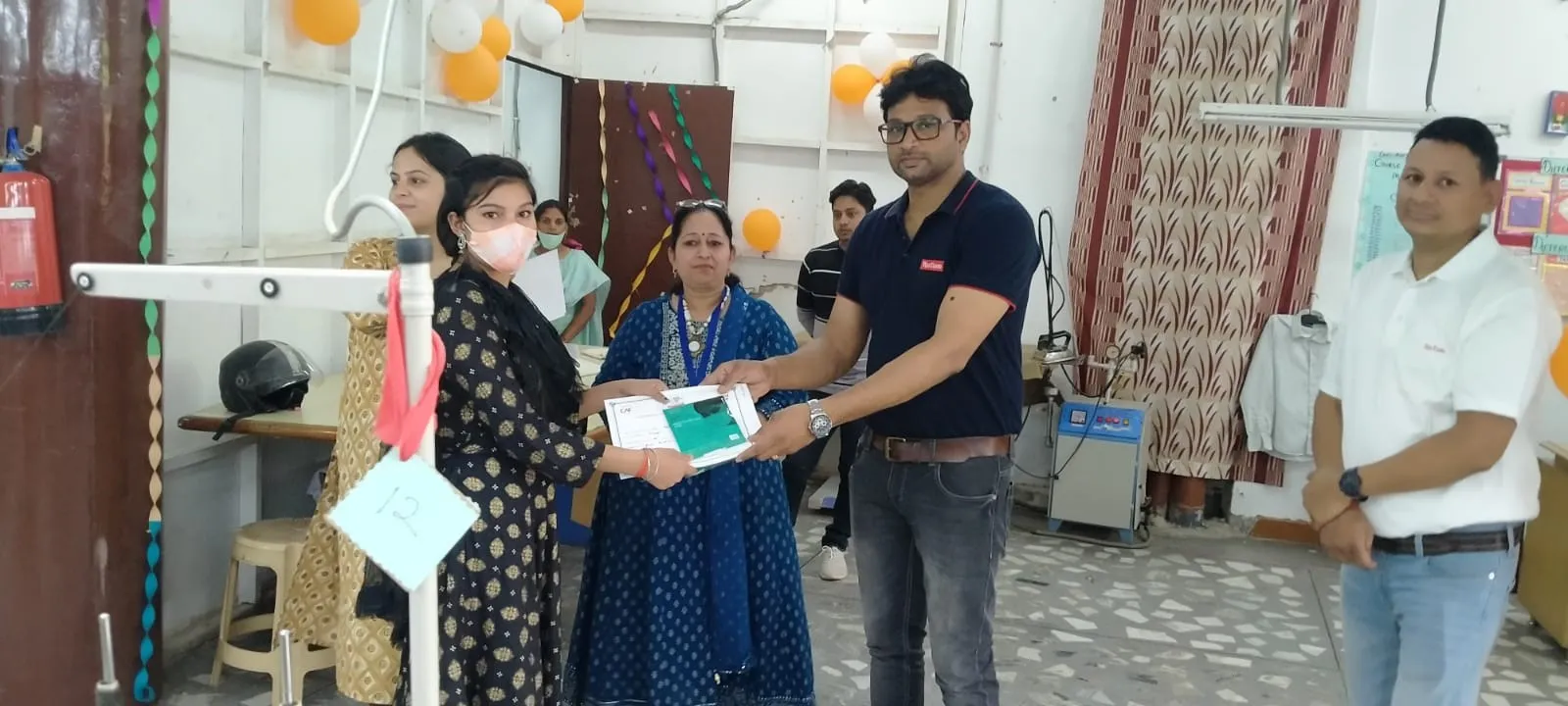
- A Certificate of Sewing Machine Operator is also provided to the applicant after successful completion, which helps them in future.
Why are Skill Development programmes necessity?
Sakshi NGO observed the need for skill development programs across various communities and took a step to help these people restore their livelihood and support their families. To achieve this goal, Sakshi with the support of CAF India and Rio Tinto, has implemented the “LIVELIHOOD AND COMMUNITY SUPPORT SERVICE PROJECT” for the communities. To support these causes, we also run the Life Skills Education Program that helps youth to build their career in a good field.
The goal of the Women Skill Development Program is to support the beneficiaries in developing their socio-economic conditions by imparting stitching and tailoring training with a job placement to each trainee. The key focus was on the women beneficiaries and making them self-empowered.
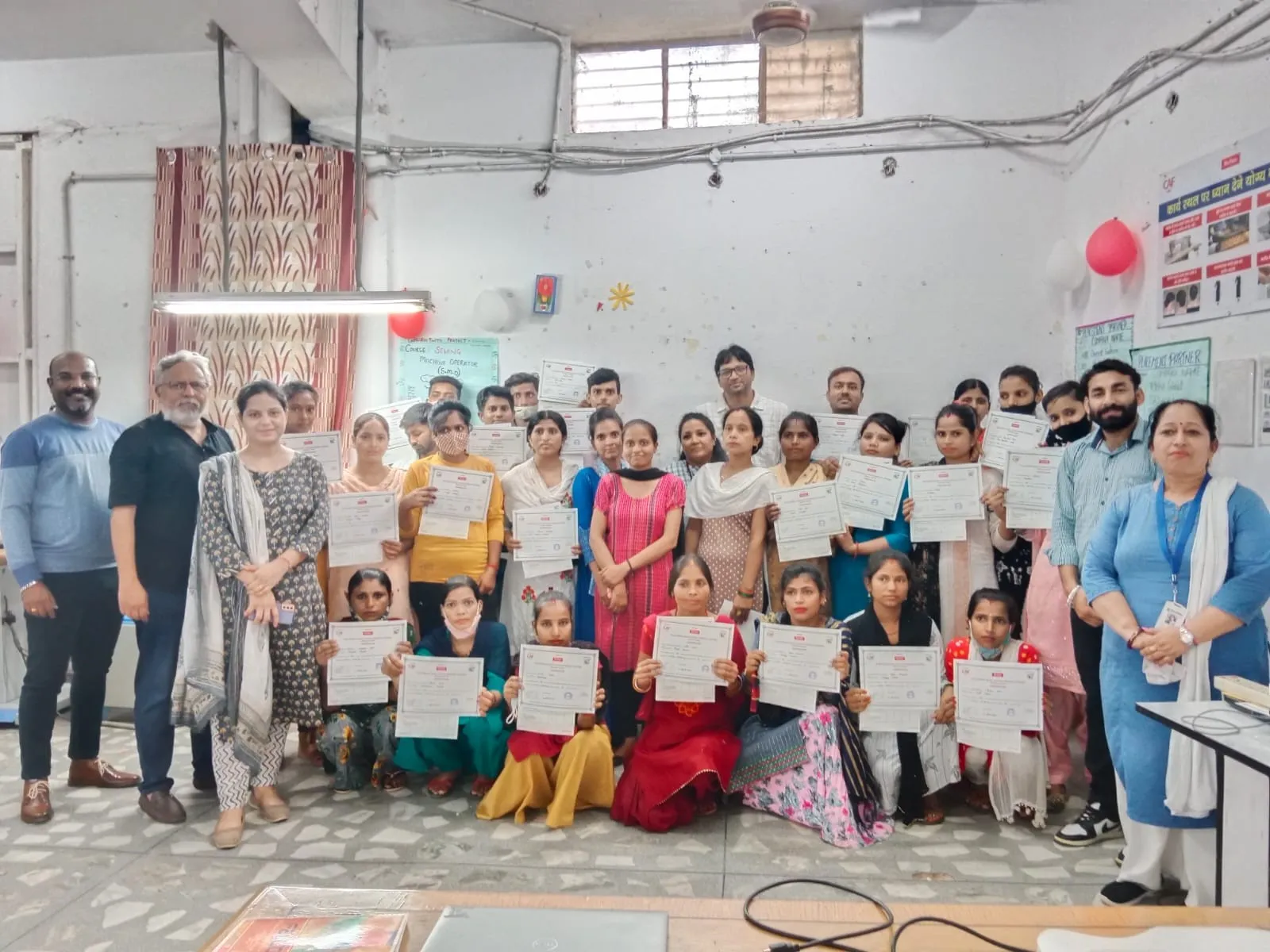
This project contributes to access to sustainable livelihoods and strengthens the resilience of, underprivileged communities in Gurugram. This project aims to support underprivileged individuals who are engaged in / willing to start their career in gthe arment industry as an income generation activity. The Sewing Machine Operator course helps them to increase their income to support their families. This project was initiated in 2020, and so far, has trained and placed more than 450 beneficiaries from diverse geographic and underprivileged communities. Recently the batch no 6th has graduated and been placed in May 2022, in which a total of 26 beneficiaries were enrolled.
As per the information collected through the baseline survey of the trainees, 42% beneficiaries belong to Uttar Pradesh, 38% belong to Bihar, 12% are from Jharkhand, and 4% each are from Gurgaon (Dundahera) and Rajasthan. It is one of the key projects of our NGO working in Gurgaon region.
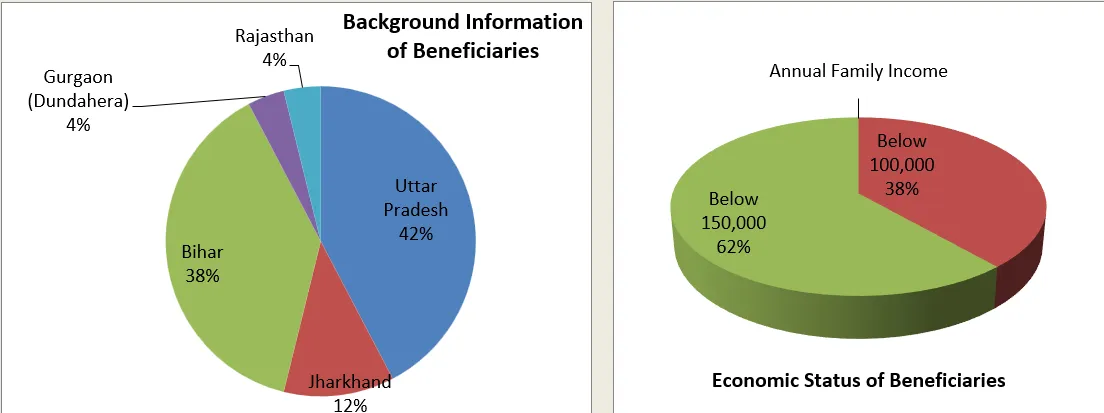
As per the collected information, the beneficiaries economic condition was very poor – 38% of Beneficiaries didn’t have sustainable employment so they earn below 1 Lac annually and rest 38% Beneficiaries’ family income is below 1,50,000. These people belong to migrated families mostly and due to weak financial conditions they wanted to learn stitching and wanted to get placed in garment sector to financially lift their families out of poverty.
The Methodology that Sakshi followed for this project was –
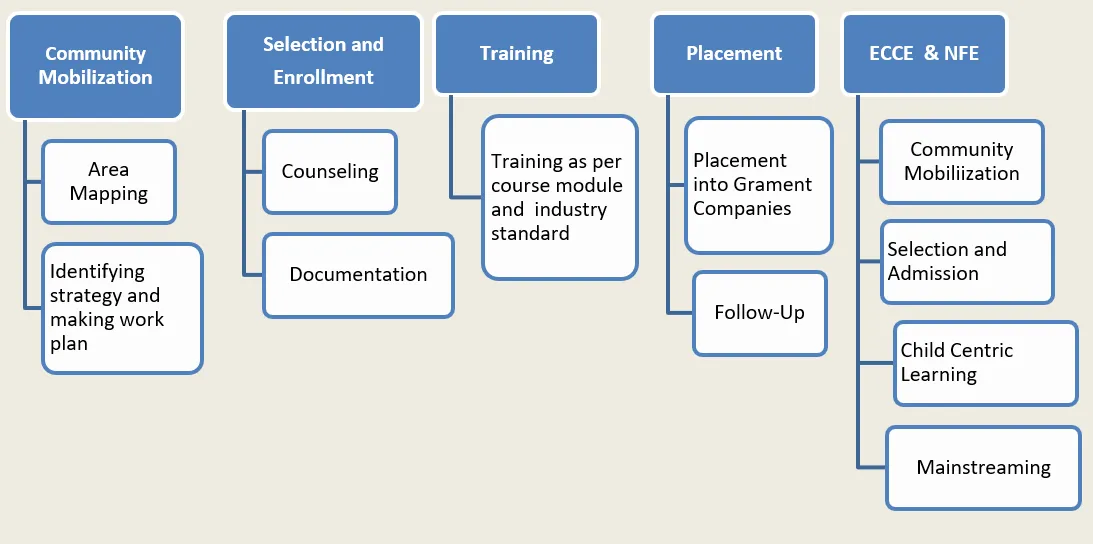
COMMUNITY MOBILIZATION –
Community Mobilization starts with the mapping of different localities, post their identification our mobilization team visits and tries to identify the socioeconomic conditions of the community residing there defining the clusters accordingly.
After the defining of the areas different mobilization strategies are listed down apart from the regular mobilization activities. Mobilization is done as per the defined plans. On the last working day of the month, overview of all mobilization activities is done to identify the flaws and improve the same in upcoming months.
SELECTION AND ENROLLMENT
The interested candidates visit the Centre. The enrolment of the beneficiaries is based on the information gathered through one to one interaction done at the Centre. The counselling is done, to understand their employment need, financial conditions and willingness to take up a job. If they were found eligible as per the selection criteria, they were admitted to the course.
ORIENTATION OF THE STUDENTS
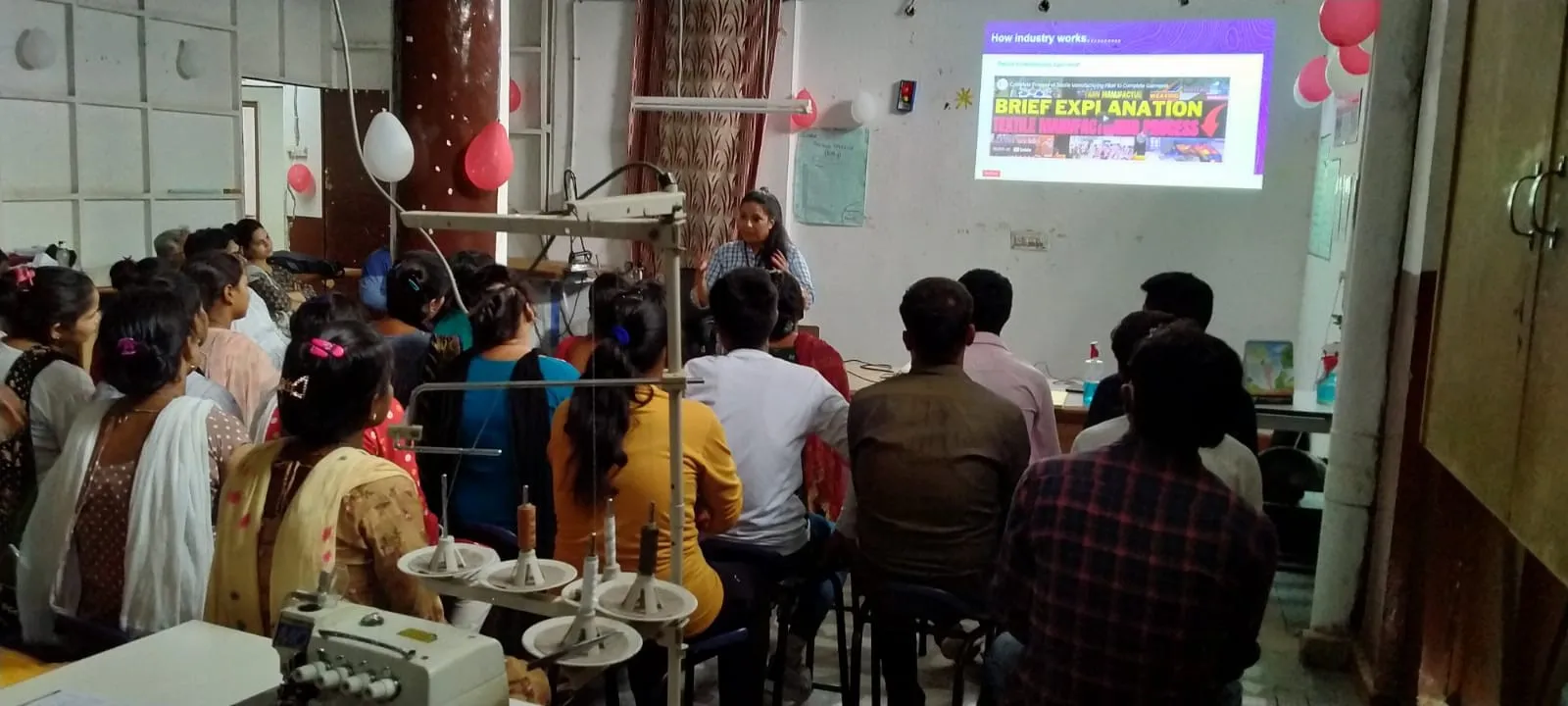
After completion of the procedure of enrolment of participants, on the 1st of May, An orientation of the program was given to all participants comprising a brief description and objective of the course. After then, the Participants also introduced themselves as well as they told others their background history and purpose to get enrolled in the course.
Ms Krishna (trainer) made all participants aware of the importance of skill development of tailoring and how it’s instrumental in improving employability and opening up income-earning opportunities as well as having a long term positive impacts such as reducing gender inequality and poverty as well as empowering women to take socially and financially independent.
TRAINING (Sewing Machine Operator)
Sakshi, CAF India & Rio Tinto Livelihood Centre, Dundahera, Gurugram provides Sewing Machine Operator Course to participants who are in search of livelihood in Garment Industry. Through this course participants learn basics of sewing including types of needles, threads, and stitches as well as they learn operations and adjustment of Loc kstitch Sewing Machines.
As we already know, in garment factories garments are made from the fabrics following a chain of process like all parts of stitching is done by combining the different garment components. So as a Seamster, It is essential to know and practise the various types of stitching parts that’s why, participants are taught to make different part of stitching such as Sleeve Placket, Cuff Making, Collar, Pocket (V-shape, Round), Pintex, Cuff (Simple, Cut & Run) as well as Straight Stitching, Circle and Square stitching was also taught them as per the demand of garment industry.
 On the first day of the stitching course, all participants are provided with an overview of the apparel industries and their production flows as well as they are given knowledge of sewing machines. On the second day, the participants get knowledge of sewing, including types of needles, threads, and stitches and they also start getting a hold on the sewing machine.
On the third day, participants are asked to practice on paper by using thread as well as they are told about the parts of the machine. On the fourth and fifth days, participants practice straight stitching and topstitching. On the last two days of the first week, participants learn about circle stitching as well as they practices on cuff and collar finishing. In the 2nd week of the course, the participants were given knowledge of Lockstitch Sewing Machines, performing basic operations and basic adjustments.
Along with stitching course participants are given training of the basic workplace Etiquette such as correct sitting posture, how to introduce with other employees and the way of talking to supervisors and seniors.
PLACEMENT
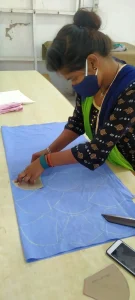 The Placements of the graduated students is an on-going activity. Job opportunities are provided to the recent pass-out students. Students are placed in garment companies. Below mentioned are the names of the companies in which the participants are successfully placed.
- Krishna Label
- Orient Fashion
- Richa Global
- Modelama
- Orchid
- Filament Fashion
- Pearl Global
The job role they have got is a sewing machine operator in which they are responsible for taking measurements, fixing accessories etc and the salary range for the majority of workers in Sewing machine operations is from Rs 8,000 to Rs 11,105 per month at the start of the job.
Most of the participants came from underprivileged communities surviving on a basic household income, and have faced a lot of adversaries and challenges throughout their lives. Their enrolment and completion of the course highlight their determination and dedication as well as helps them to succeed and financially lift their families out of poverty.
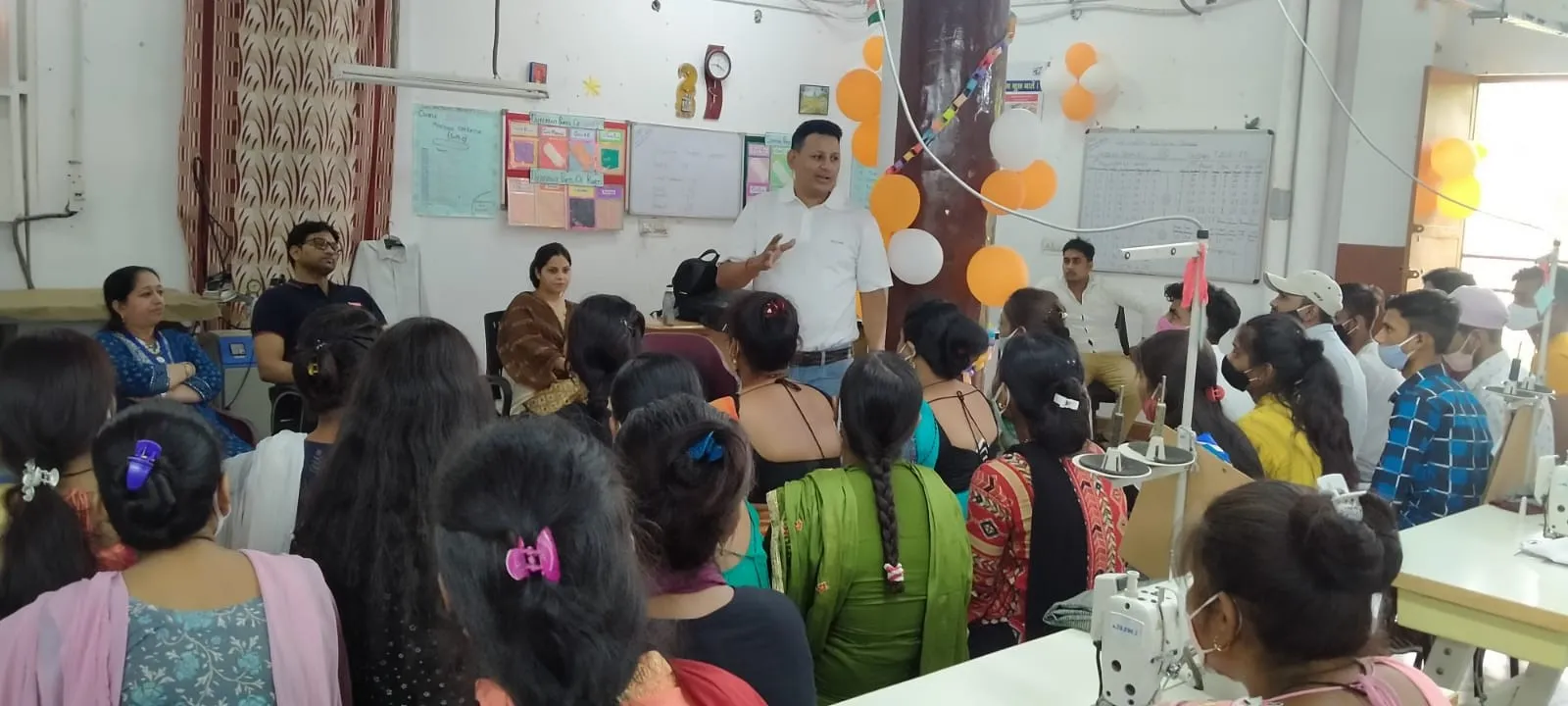
To Elicit the participation of the community in all the programs have been one of the most important strategies of Sakshi to aim towards sustainability, we ensure a proper system of support from experiential learning to job placements at Garment factories and have been able to successfully achieve 100% placement rate. These women now will enjoy their financial freedom as well they will be the support to their families which indirectly benefitting nearly 1000 people. These centers are sponsored by Rio Tinto.